


How Game-Based Learning Makes Education More Engaging
Discover how game-based learning transforms traditional education into interactive adventures through challenges, storytelling, exploration, and problem-solving.

How Game-Based Learning Makes Education More!
Education is constantly evolving. With technology becoming an important part of everyday life, traditional teaching methods are also finding new ways to connect with students. One approach gaining attention is game-based learning, where educational concepts are taught through interactive games, challenges, missions, and adventures.
Instead of simply reading a chapter or memorizing information, students can explore environments, solve problems, complete objectives, and learn through experience.
But how can games make education more engaging? And what makes learning through gameplay different from traditional classroom learning?
Let's explore.
1. What Is Game-Based Learning?
Game-based learning is an educational approach that uses games to teach specific subjects, concepts, and skills.
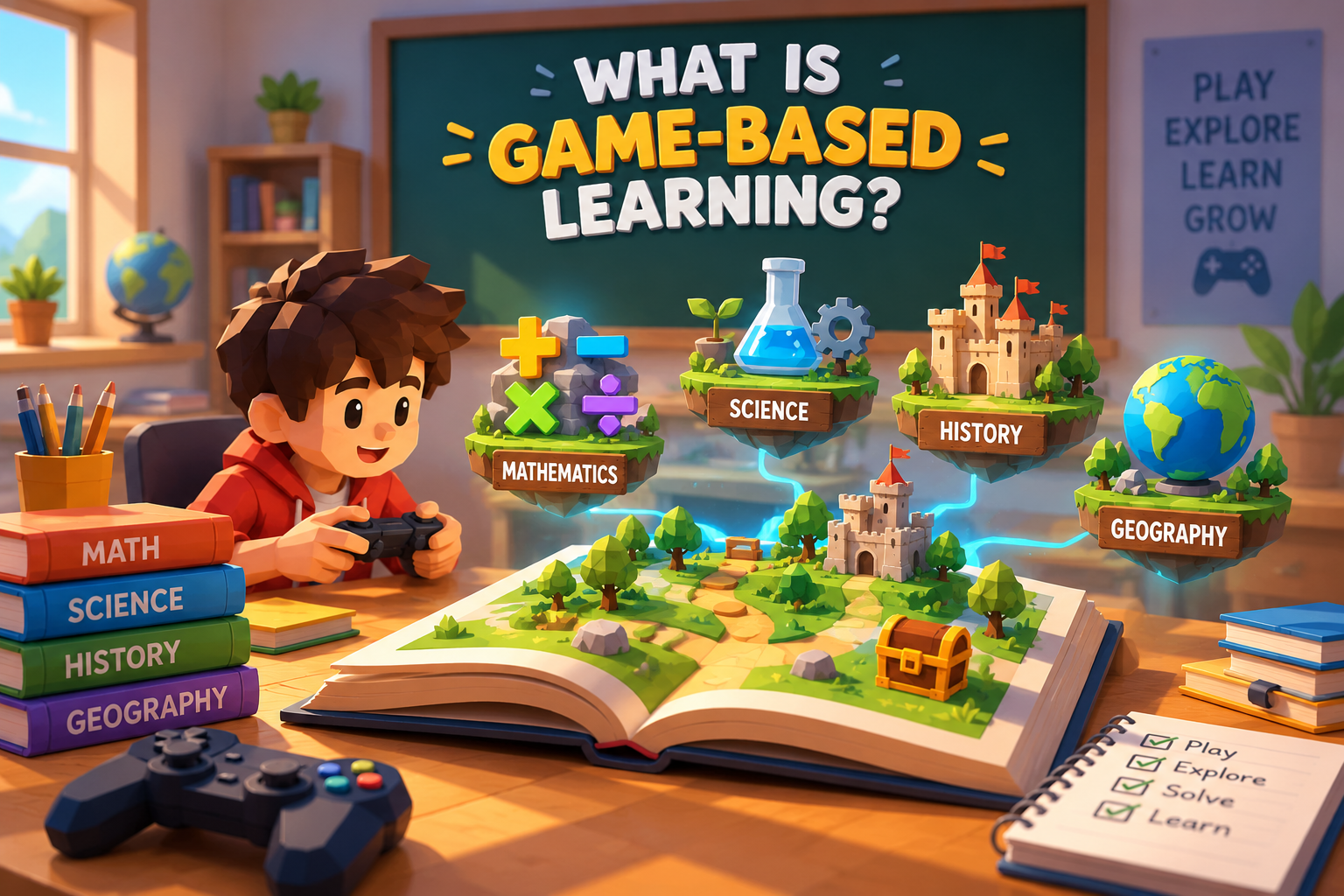
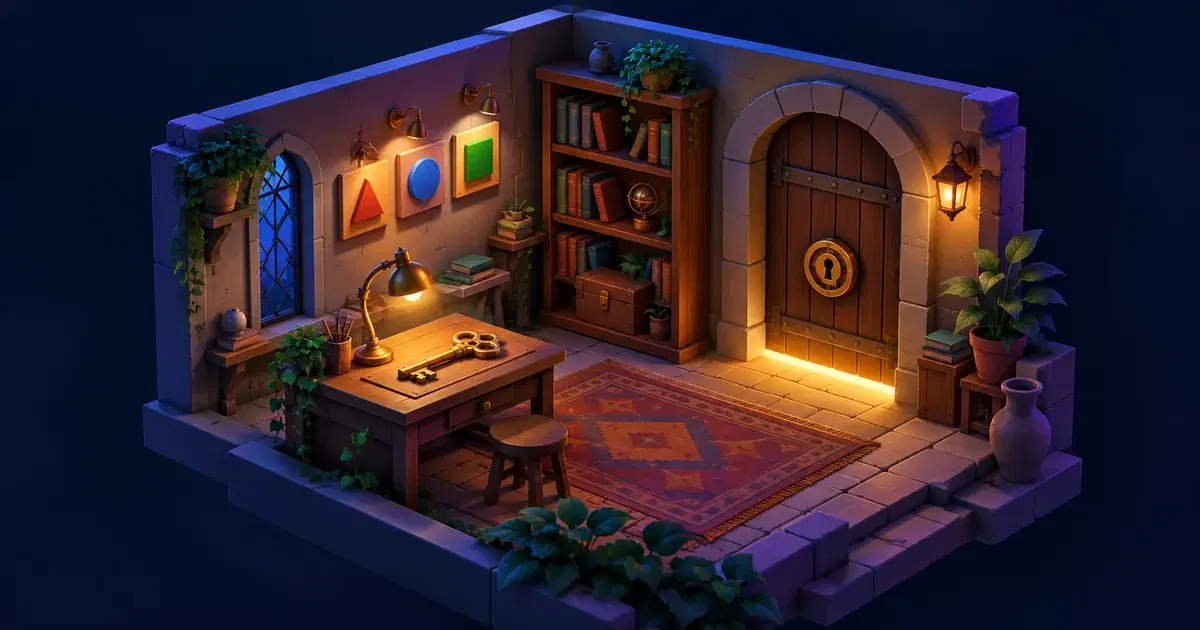
In this method, learning becomes part of the gameplay. Students might solve mathematical puzzles to unlock a door, explore a virtual environment to understand science, or complete historical missions to discover important events.
The objective is not simply to play a game. It is to use gameplay as a meaningful way to understand and apply knowledge.
For example:
- Mathematics: Solve equations to unlock new levels.
- Science: Explore a virtual laboratory and conduct experiments.
- History: Travel through different historical periods and complete missions.
- Geography: Explore maps, identify locations, and understand different environments.
2. Learning Becomes More Interactive
One of the biggest advantages of game-based learning is interaction.
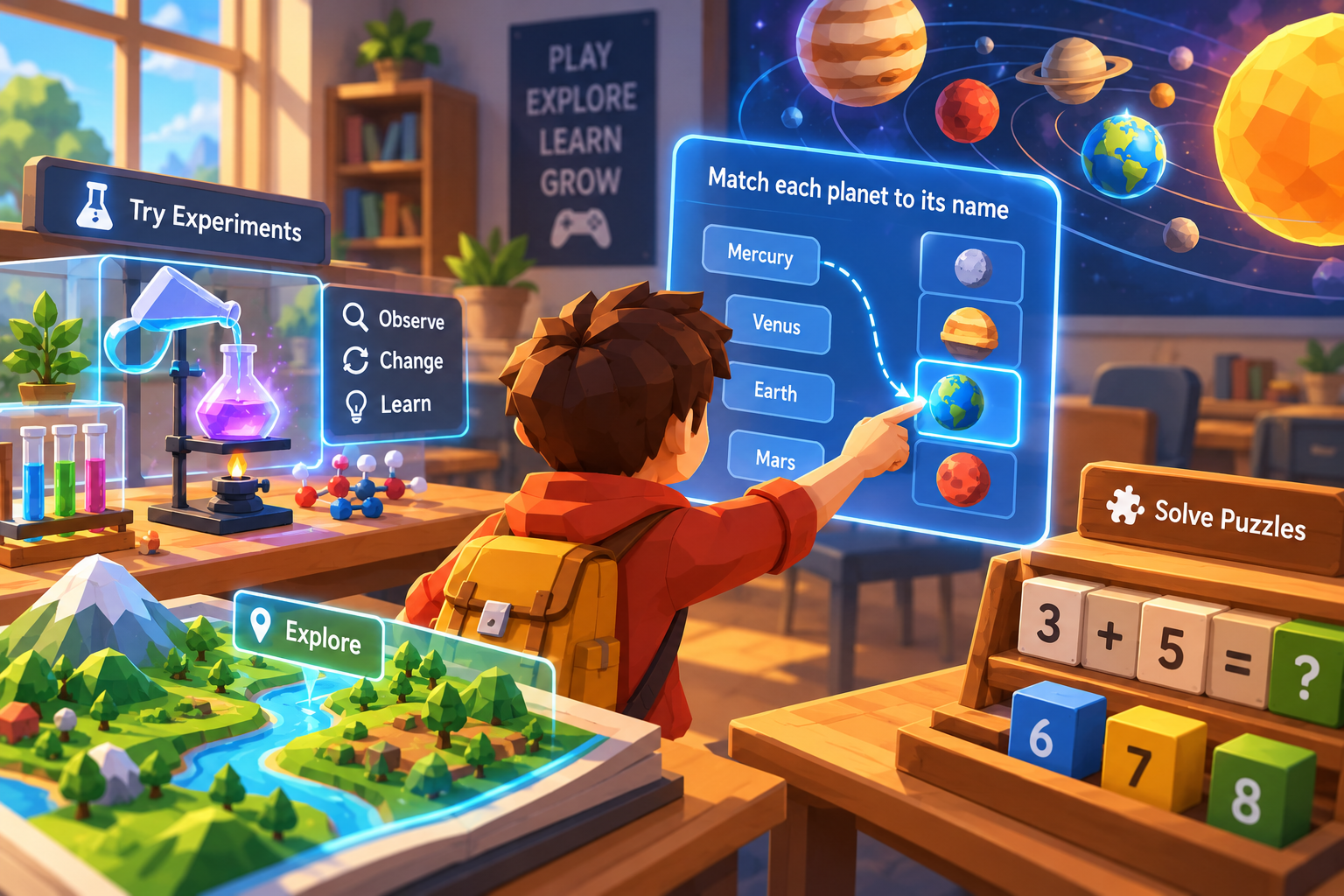
In traditional learning, students often receive information by reading textbooks, listening to explanations, or watching presentations. Although these methods are valuable, they do not always provide opportunities for students to actively experiment with concepts.
Games introduce interaction through activities such as:
- Solving puzzles and challenges.
- Exploring virtual environments.
- Completing missions and objectives.
- Making decisions and observing outcomes.
- Experimenting with different solutions.
For example, instead of only learning about the solar system through diagrams, students could explore a virtual space environment, visit different planets, and discover their characteristics.
This makes learning an active experience rather than simply receiving information.
3. Turning Difficult Subjects into Fun Challenges
Some subjects can be difficult to understand, especially when they involve abstract concepts or complicated processes.
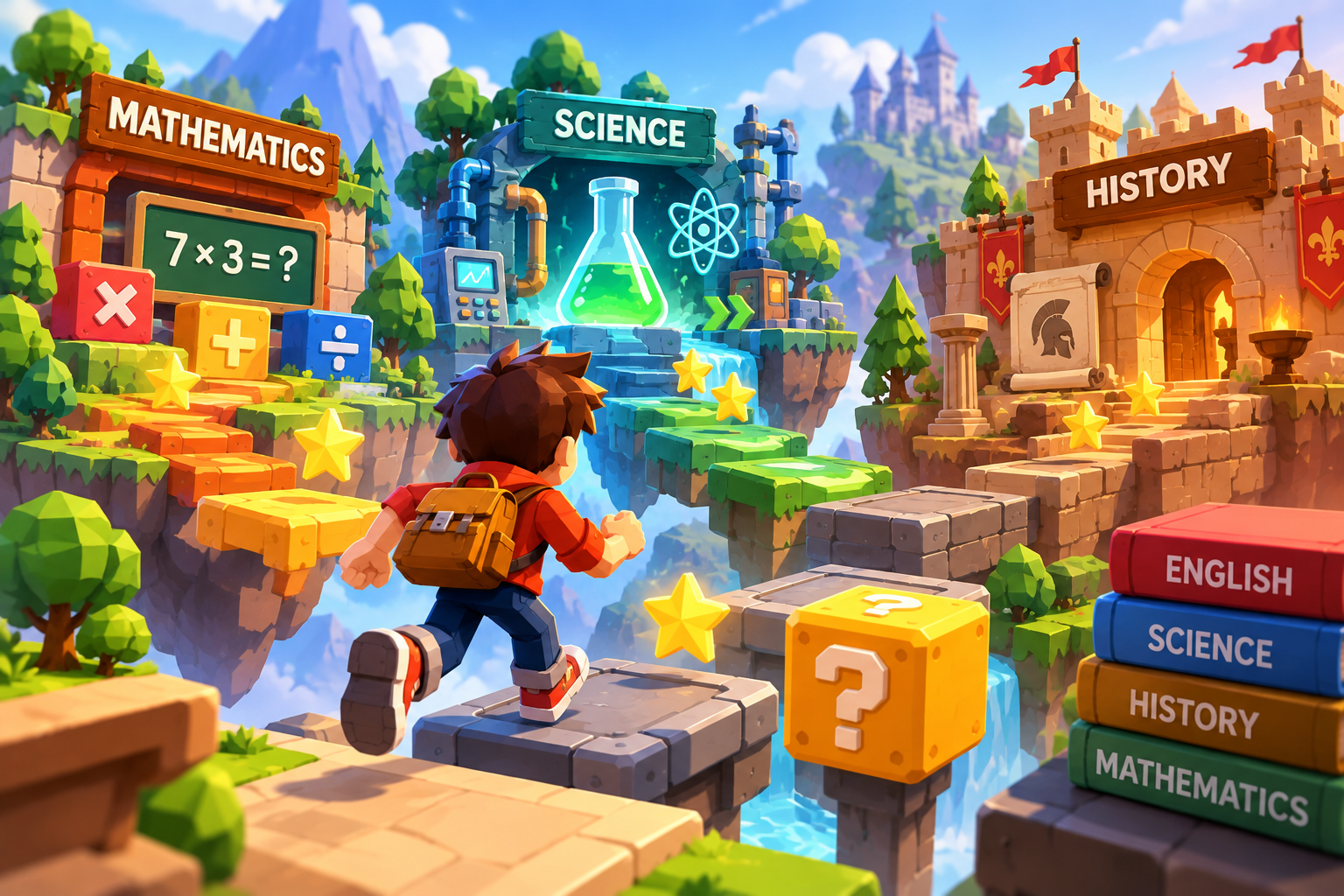
Game-based learning can make these subjects easier to approach by presenting information through visual experiences and practical challenges.
Imagine learning mathematics through an adventure game.
A student enters a mysterious world where every locked gate requires solving a mathematical problem. Each correct answer unlocks a new area, while additional challenges introduce more advanced concepts.
Similarly, a science game could allow students to experiment with different materials, observe reactions, and understand scientific principles through gameplay.
By connecting educational concepts with interactive experiences, games can make challenging topics more approachable.
4. Encouraging Problem-Solving and Critical Thinking
Games naturally introduce problems that players must solve to progress.
Whether it is finding the correct path, completing a mission, solving a puzzle, or managing limited resources, players constantly make decisions.
These activities can encourage important skills such as:
- Critical Thinking: Understanding situations and evaluating possible solutions.
- Problem-Solving: Finding ways to overcome challenges.
- Decision-Making: Choosing actions based on available information.
- Creativity: Exploring different approaches to complete objectives.
- Logical Reasoning: Recognizing patterns and understanding relationships.
For example, a game about environmental science could challenge students to manage a virtual ecosystem. Their decisions about resources, pollution, and wildlife would affect the environment.
This allows students to understand the consequences of their decisions through interactive experiences.
5. Learning Through Mistakes and Feedback
Making mistakes is a natural part of learning. However, students sometimes hesitate to answer questions because they are afraid of giving incorrect answers.
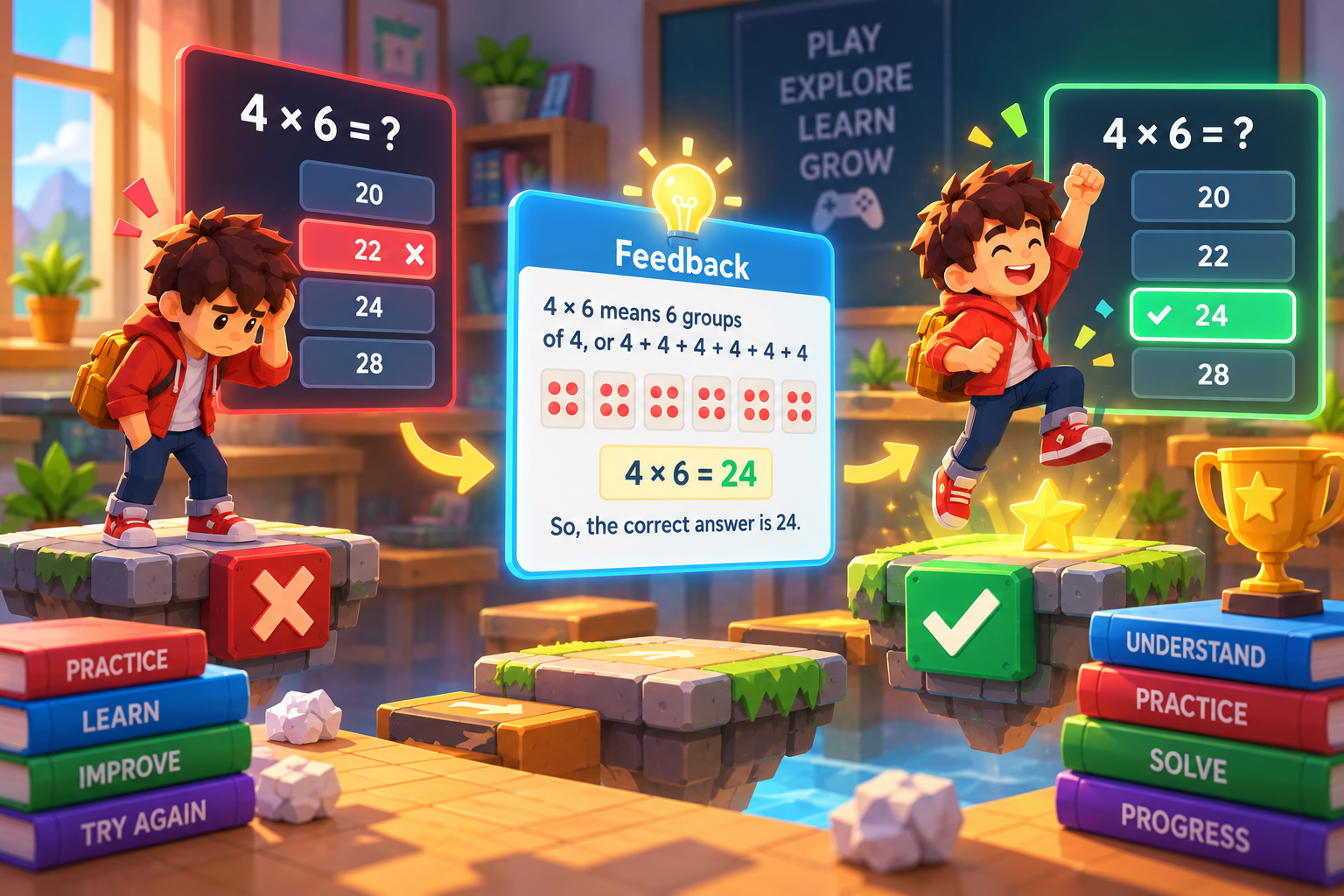
Games can create a more comfortable environment for experimentation.
Players can attempt challenges, receive feedback, understand their mistakes, and try again.
For example, if a student answers a mathematical question incorrectly, the game could provide a helpful explanation and another opportunity to solve the problem.
This creates a learning cycle:
- Attempt a challenge.
- Receive feedback.
- Understand the mistake.
- Try a different approach.
- Apply the knowledge to progress.
Instead of treating mistakes as failures, game-based learning can present them as opportunities to improve.
6. Making Education Feel Like an Adventure
What if an entire textbook chapter could become an adventure game?
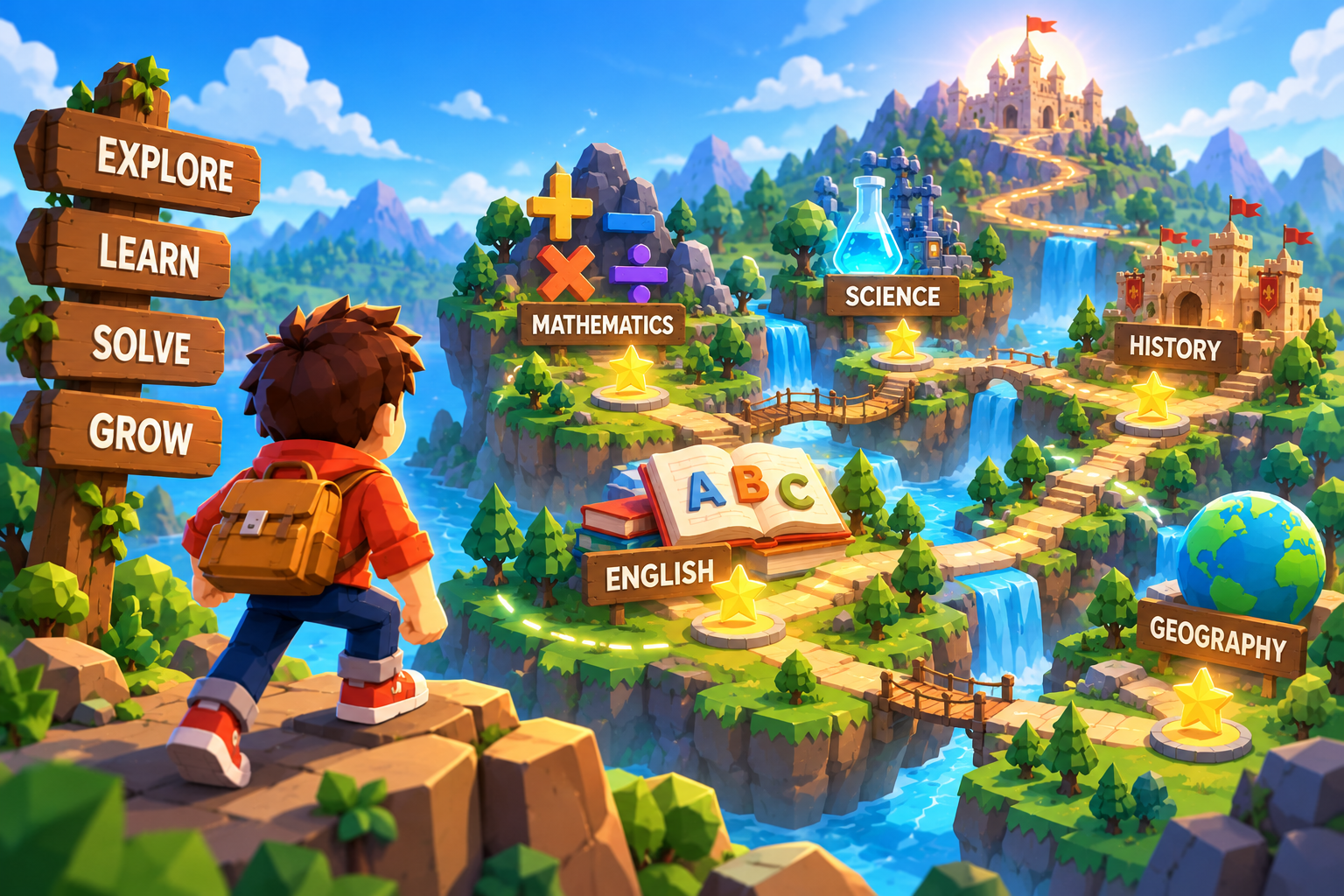
Imagine a history chapter transformed into an RPG where students travel through different historical periods, interact with characters, explore locations, and complete missions based on real historical events.
Or imagine a mathematics chapter presented as a 3D adventure where students solve equations, collect objects, unlock new locations, and defeat challenges using their knowledge.
This approach combines storytelling, exploration, and educational objectives.
Some elements that can make educational games engaging include:
- Storytelling: Giving students a reason to explore and complete objectives.
- Missions: Dividing lessons into smaller, manageable challenges.
- Progression: Unlocking new areas and concepts as students advance.
- Rewards: Recognizing achievements and completed objectives.
- Exploration: Allowing students to discover information through gameplay.
When educational content is connected to an interesting experience, students have more opportunities to interact with the subject.
7. The Role of Game Development in Education
Creating effective educational games requires more than adding questions to an existing game.
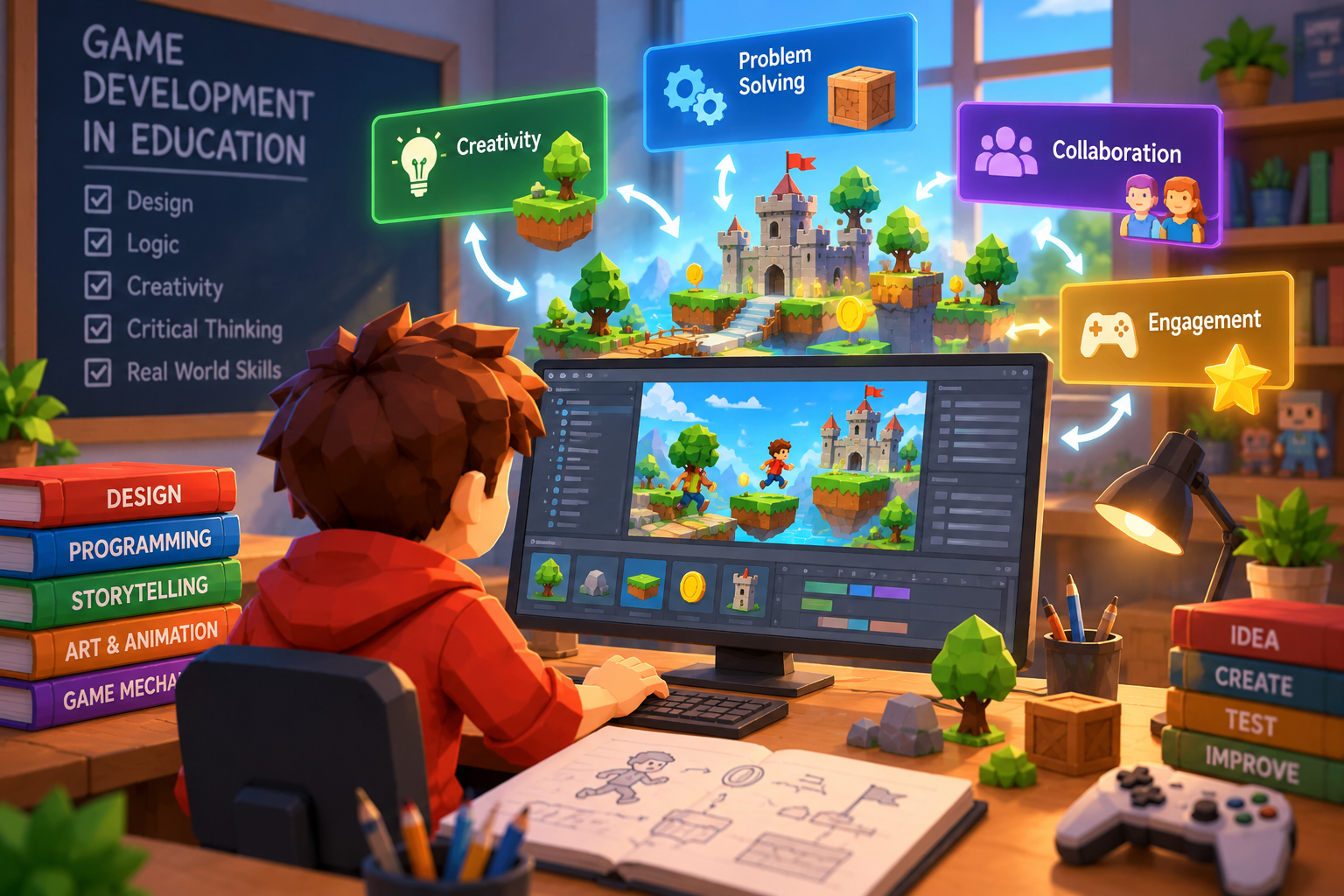
Developers must understand the educational objectives, identify important concepts, and design gameplay mechanics that support learning.
For example, a game designed to teach fractions could include interactive objects that students divide into equal parts. A physics-based game could allow students to experiment with gravity, movement, and force.
The gameplay should support the lesson rather than distract from it.
This is where game development platforms and educational game creation tools become valuable. They allow creators to combine environments, characters, interactions, challenges, and learning objectives into a single experience.
8. How Zimension Connects Game Development and Learning
At Zimension, we believe that game creation can open new possibilities for education and creativity.
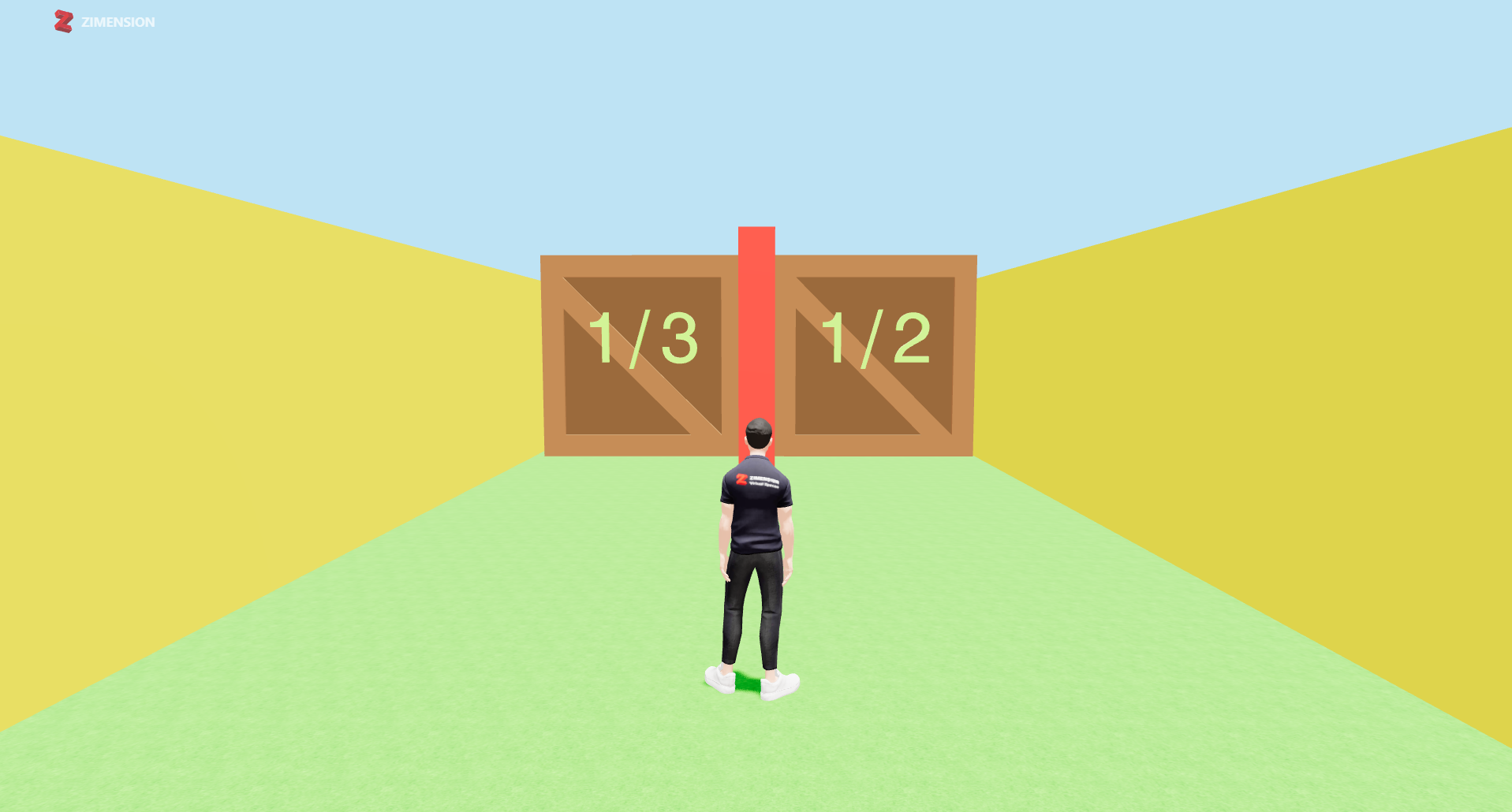
Educational games offer an opportunity to bring academic concepts to life through interactive experiences. Students and creators can explore how storytelling, gameplay mechanics, and visual environments can be used to communicate ideas.
Imagine creating:
- A mathematics adventure where players solve equations to progress.
- A science exploration game where players discover how different systems work.
- A history-based RPG where players experience important historical events.
- A geography exploration game where players travel across virtual environments.
- A puzzle game that introduces logical reasoning and problem-solving.
These ideas demonstrate how game development can connect creativity with education.
The goal is to make learning more interactive, meaningful, and enjoyable.
Conclusion
Game-based learning is changing the way we think about education. By combining interaction, exploration, challenges, and feedback, games can create new opportunities for students to understand and apply what they learn.
From solving mathematical puzzles to exploring historical worlds, educational games can transform ordinary lessons into memorable experiences.
The future of education does not have to be limited to textbooks and traditional classrooms. It can also include virtual worlds, interactive adventures, and creative learning experiences.
What if the next great way to learn a subject was not just reading a chapter, but playing through it?
At Zimension, we encourage you to explore the possibilities of educational game development and imagine new ways to make learning interactive.
Build something like this, without code.
Create 3D games, VR experiences and interactive worlds in your browser.
Related posts
 game development
Designing Game Environments in Zimension
Learn how to create stunning 3D game environments in Zimension. Follow this step-by-step tutorial to sculpt terrain, create rivers, paint ground surfaces, distribute trees, and add final visual effect
 game development
How to Make Your First Educational Game in Zimension
Learn how to create your first educational game in Zimension, from choosing a fun game idea to designing gameplay, adding rewards, and testing your creation. A beginner-friendly guide.
 game development
How to Make an Escape Room Game Without Coding in Zimension
Build a small escape room in Zimension using Basics, Boolean variables, and a door transition. See the real controls, connect the puzzle, and share a playable link.